
Essential details
Shipping:Express delivery
Product Introduction
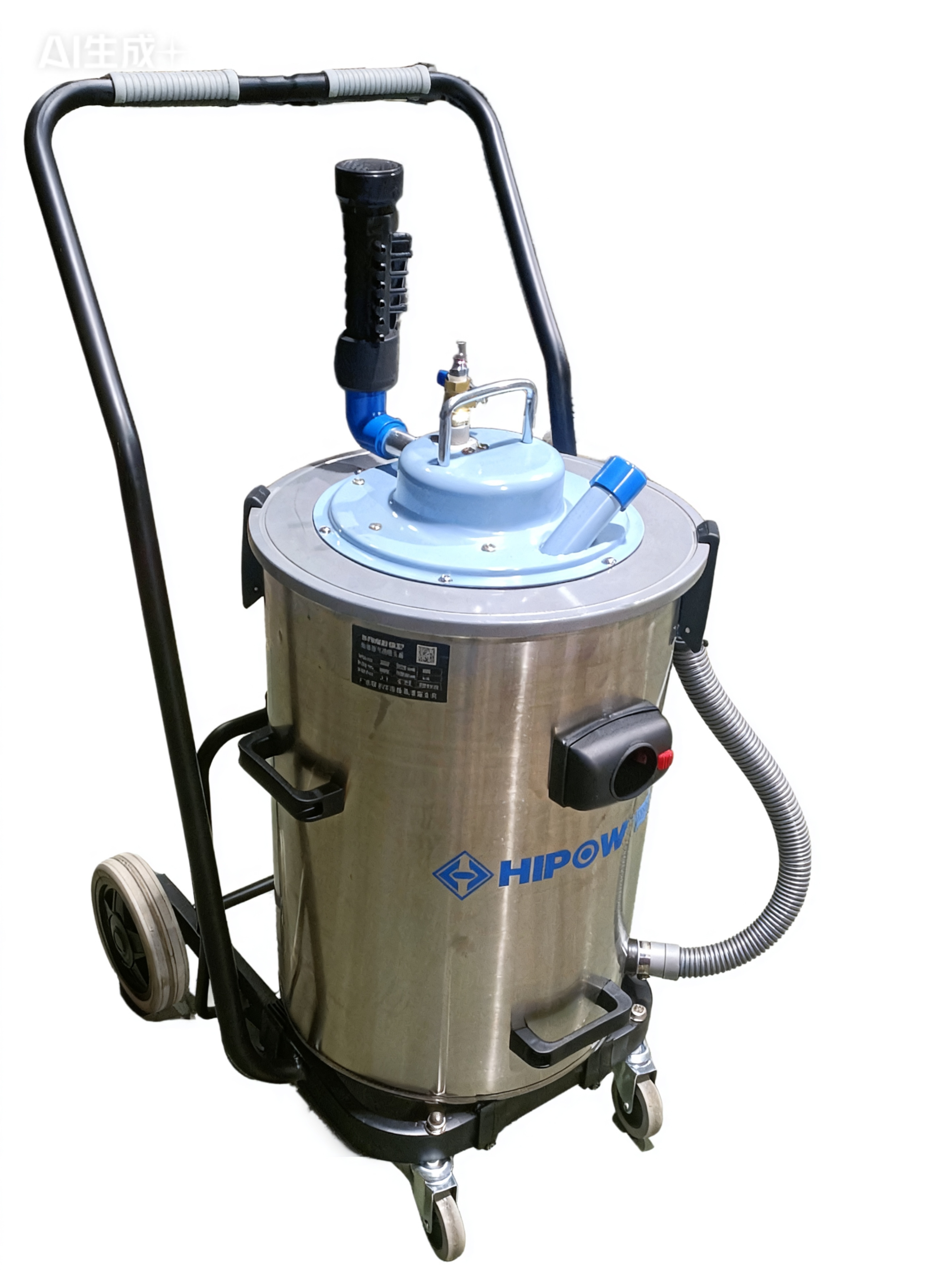
Introduction to the QD Series Pneumatic Industrial Vacuum Cleaner
The QD Series Pneumatic Industrial Vacuum Cleaner is a pneumatic (compressed air-driven) cleaning device widely used in industrial fields. With its features of explosion-proof, durability, and simple maintenance, it serves as an ideal alternative to electric vacuum cleaners in specific environments.
I. Core Working Principle
It utilizes the Venturi tube principle (or ejector principle). When compressed air passes through a narrow nozzle, it generates a high-speed airflow, creating a powerful negative pressure (vacuum) in the vacuum chamber (mixing chamber), thereby drawing in external dust and debris. The contaminants are collected in a compatible container (usually a metal drum or dust collection barrel), and the filtered clean air is discharged.
It utilizes the Venturi tube principle (or ejector principle). When compressed air passes through a narrow nozzle, it generates a high-speed airflow, creating a powerful negative pressure (vacuum) in the vacuum chamber (mixing chamber), thereby drawing in external dust and debris. The contaminants are collected in a compatible container (usually a metal drum or dust collection barrel), and the filtered clean air is discharged.
II. Main Features and Advantages
1. Intrinsically Safe and Explosion-Proof:
2. The most prominent advantage. It is entirely driven by compressed air, with no motor or electrical circuits, and produces no electrical sparks or heat during operation. Therefore, it is particularly suitable for environments with flammable and explosive gases or dust (such as aluminum/magnesium powder, coal dust, flour, chemical raw materials). It is an essential safety device for industries like petroleum, chemical, pharmaceutical, spray painting (paint booths), and coal processing.
3. Rugged and Durable: Core components are typically made of aluminum alloy or stainless steel, offering corrosion resistance and impact resistance.
5. No vulnerable motors or bearings; simple mechanical structure results in low failure rates and a long service life.
6. Low Maintenance Costs: No need to replace electrical components like brushes or bearings. Main maintenance tasks involve cleaning filters and checking air hoses and seals. Filter elements are usually washable and reusable.
7. Strong Adaptability: Insensitive to humid environments; can be used to suction small amounts of liquid (requires specific filter elements and drainage devices).
8. Convenient Power Adjustment: Suction power can be controlled by adjusting the pressure and flow of the incoming compressed air.
9. Heat Resistant: Can be used to suction high-temperature dust (e.g., in boiler rooms, welding fumes; attention must be paid to the temperature resistance of the filter material).
10. Instant Start and Continuous Operation:
11. No motor overheating issues; as long as the compressed air supply is stable, it can operate 24/7 without interruption, making it suitable for prolonged cleaning tasks.
1. Intrinsically Safe and Explosion-Proof:
2. The most prominent advantage. It is entirely driven by compressed air, with no motor or electrical circuits, and produces no electrical sparks or heat during operation. Therefore, it is particularly suitable for environments with flammable and explosive gases or dust (such as aluminum/magnesium powder, coal dust, flour, chemical raw materials). It is an essential safety device for industries like petroleum, chemical, pharmaceutical, spray painting (paint booths), and coal processing.
3. Rugged and Durable: Core components are typically made of aluminum alloy or stainless steel, offering corrosion resistance and impact resistance.
5. No vulnerable motors or bearings; simple mechanical structure results in low failure rates and a long service life.
6. Low Maintenance Costs: No need to replace electrical components like brushes or bearings. Main maintenance tasks involve cleaning filters and checking air hoses and seals. Filter elements are usually washable and reusable.
7. Strong Adaptability: Insensitive to humid environments; can be used to suction small amounts of liquid (requires specific filter elements and drainage devices).
8. Convenient Power Adjustment: Suction power can be controlled by adjusting the pressure and flow of the incoming compressed air.
9. Heat Resistant: Can be used to suction high-temperature dust (e.g., in boiler rooms, welding fumes; attention must be paid to the temperature resistance of the filter material).
10. Instant Start and Continuous Operation:
11. No motor overheating issues; as long as the compressed air supply is stable, it can operate 24/7 without interruption, making it suitable for prolonged cleaning tasks.
III. Typical Application Scenarios
• Explosion-Proof Areas: Petrochemical plants, gas stations, natural gas stations, ammunition depots, solvent production workshops.
• Flammable Dust Environments: Flour mills, wood processing plants (sawdust), metal polishing (aluminum/magnesium alloy dust), plastic pellet processing, coal dust preparation workshops.
• Harsh Environments with Moisture or Heavy Dust: Foundries, construction sites, cement plants, mines.
• Applications Requiring Liquid Suction or Dry/Wet Use: Food processing plants, wastewater treatment stations, cleaning up accumulated water after equipment washing.
• As a Power Source for Centralized Vacuum Systems: Connected to pipeline networks for cleaning multiple workstations.
• Explosion-Proof Areas: Petrochemical plants, gas stations, natural gas stations, ammunition depots, solvent production workshops.
• Flammable Dust Environments: Flour mills, wood processing plants (sawdust), metal polishing (aluminum/magnesium alloy dust), plastic pellet processing, coal dust preparation workshops.
• Harsh Environments with Moisture or Heavy Dust: Foundries, construction sites, cement plants, mines.
• Applications Requiring Liquid Suction or Dry/Wet Use: Food processing plants, wastewater treatment stations, cleaning up accumulated water after equipment washing.
• As a Power Source for Centralized Vacuum Systems: Connected to pipeline networks for cleaning multiple workstations.
IV. Common Configurations and Models in the Product Series
The QD Series is typically differentiated by capacity, material, and function:
• Capacity: Ranging from small 20-liter portable models to large fixed or mobile cart-type models of 80 liters or more.
• Material:
o Standard Type: Carbon steel with paint coating, economical and practical.
Stainless Steel Type: Suitable for industries with high hygiene requirements like food and pharmaceuticals, offering corrosion resistance and easy cleaning.
o Anti-Static Type: Drum body and components are specially treated to prevent static buildup.
• Function:
o Dry Vacuum Cleaner: Primarily for dry dust and particles.
o Dry/Wet Vacuum Cleaner: Equipped with anti-overflow devices and liquid level protection for liquid suction.
o Wear-Resistant Type: Equipped with cyclone separators or special wear-resistant accessories for suction of highly abrasive materials like metal shavings and glass fragments.
The QD Series is typically differentiated by capacity, material, and function:
• Capacity: Ranging from small 20-liter portable models to large fixed or mobile cart-type models of 80 liters or more.
• Material:
o Standard Type: Carbon steel with paint coating, economical and practical.
Stainless Steel Type: Suitable for industries with high hygiene requirements like food and pharmaceuticals, offering corrosion resistance and easy cleaning.
o Anti-Static Type: Drum body and components are specially treated to prevent static buildup.
• Function:
o Dry Vacuum Cleaner: Primarily for dry dust and particles.
o Dry/Wet Vacuum Cleaner: Equipped with anti-overflow devices and liquid level protection for liquid suction.
o Wear-Resistant Type: Equipped with cyclone separators or special wear-resistant accessories for suction of highly abrasive materials like metal shavings and glass fragments.
V. Usage Precautions
1. Air Source Requirements: Must provide clean, dry compressed air. Moisture and oil can damage the vacuum cleaner's interior and reduce efficiency. It is recommended to install filters, pressure regulators, and lubricators (F.R.L. combination) upstream.
2. Noise: Due to high-speed airflow discharge, operating noise is relatively high (typically louder than electric vacuum cleaners). Operators should wear hearing protection.
3. Energy Consumption: Consumes factory compressed air. In terms of energy conversion efficiency, it may be more energy-intensive than electric vacuum cleaners. Ensure the factory air compression system has sufficient capacity.
4. Suction Power and Air Consumption: Suction power directly depends on the pressure and flow of the compressed air. Refer to the product nameplate or manual to provide a matching air source (typically requiring pressure between 0.5-0.7 MPa).
5. Filtration System: Regular cleaning or replacement of filter elements is key to maintaining optimal suction. For fine dust (e.g., welding fumes), high-efficiency filters (such as HEPA filter elements) are required.
1. Air Source Requirements: Must provide clean, dry compressed air. Moisture and oil can damage the vacuum cleaner's interior and reduce efficiency. It is recommended to install filters, pressure regulators, and lubricators (F.R.L. combination) upstream.
2. Noise: Due to high-speed airflow discharge, operating noise is relatively high (typically louder than electric vacuum cleaners). Operators should wear hearing protection.
3. Energy Consumption: Consumes factory compressed air. In terms of energy conversion efficiency, it may be more energy-intensive than electric vacuum cleaners. Ensure the factory air compression system has sufficient capacity.
4. Suction Power and Air Consumption: Suction power directly depends on the pressure and flow of the compressed air. Refer to the product nameplate or manual to provide a matching air source (typically requiring pressure between 0.5-0.7 MPa).
5. Filtration System: Regular cleaning or replacement of filter elements is key to maintaining optimal suction. For fine dust (e.g., welding fumes), high-efficiency filters (such as HEPA filter elements) are required.
VI. Summary
The QD Series Pneumatic Industrial Vacuum Cleaner is a reliable and safe cleaning tool specifically designed for demanding industrial environments. It offers irreplaceable advantages in explosion-proof safety and durability, making it the preferred choice for workshops and factories with explosion risks or harsh conditions. When selecting a model, choose the appropriate type and configuration based on specific application materials (dry/wet, particle size, flammability), environmental requirements (explosion-proof rating, hygiene standards), and the factory's compressed air conditions.
If you need assistance selecting a model for a specific scenario, it is recommended to provide more detailed information about the working environment (e.g., dust type, explosion-proof requirements, need for liquid suction) to receive more precise product recommendations.
The QD Series Pneumatic Industrial Vacuum Cleaner is a reliable and safe cleaning tool specifically designed for demanding industrial environments. It offers irreplaceable advantages in explosion-proof safety and durability, making it the preferred choice for workshops and factories with explosion risks or harsh conditions. When selecting a model, choose the appropriate type and configuration based on specific application materials (dry/wet, particle size, flammability), environmental requirements (explosion-proof rating, hygiene standards), and the factory's compressed air conditions.
If you need assistance selecting a model for a specific scenario, it is recommended to provide more detailed information about the working environment (e.g., dust type, explosion-proof requirements, need for liquid suction) to receive more precise product recommendations.
